
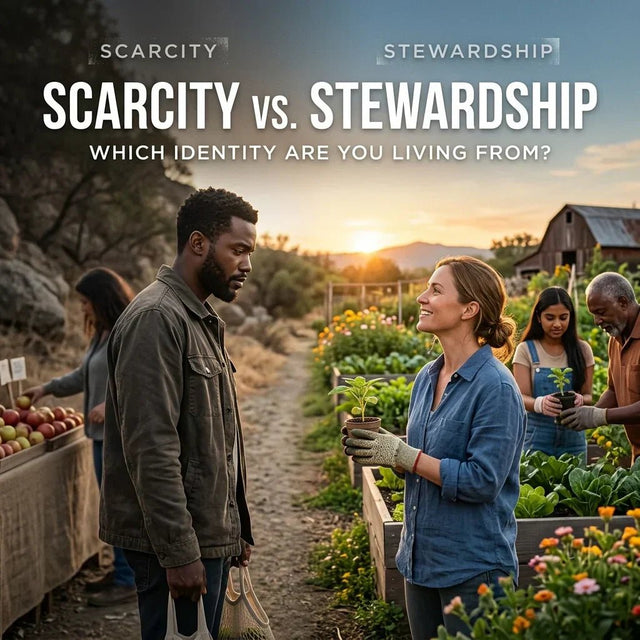
Scarcity vs. Stewardship: Which Identity Are You Living From?
Most people view money as a math problem. It is seen as a series of additions and subtractions, a balance on a screen, or a stack of paper. However, financial experts and psychologists suggest that the way individuals handle money has very little to do with math and almost everything to do with identity.
At the core of every financial decision lies a fundamental belief system. This system acts as a lens through which every dollar is viewed. For most young adults, these belief systems fall into one of two categories: a scarcity mindset or a stewardship identity. One is rooted in the fear of "never enough," while the other is rooted in the discipline of responsible management. Understanding which identity is driving the car can change the entire destination of a person's financial life.
The Scarcity Mindset: The "Never Enough" Trap
A scarcity mindset is not defined by the amount of money in a bank account. It is a psychological state where a person feels that resources are perpetually limited. This creates a constant sense of urgency and anxiety. Research into the psychology of scarcity shows that when people feel they lack something: whether it is time, money, or food: their brains enter a state of "tunneling."
In this state, the focus narrows significantly. A person only sees the immediate crisis. They might obsess over a $20 bill while ignoring a $5,000 investment opportunity. They might hoard cash in a low-interest savings account out of fear, even as inflation eats away at its value. The scarcity identity whispers that there is never enough to go around, leading to a "me-first" mentality and a paralyzing fear of loss.

Symptoms of Financial Scarcity
When someone operates from a scarcity identity, their behaviors become predictable:
- Reactive Decision Making: Choices are made based on the pressure of the moment rather than long-term goals.
- Avoidance: Because money causes anxiety, the person might stop checking their bank accounts or avoid opening bills altogether.
- Short-Term Gratification: There is a subconscious belief that the money might disappear, so it is better to spend it now on something tangible.
- Comparison and Envy: Other people’s success is viewed as a threat. If a friend gets a promotion, the scarcity mindset feels there is now "less" success available for everyone else.
This identity often stems from childhood experiences or generational cycles where resources were genuinely thin. Even after a person begins earning a healthy salary, the "ghost" of scarcity can remain, causing them to live in survival mode long after the survival threat has passed.
The Stewardship Identity: Management over Ownership
In contrast, stewardship is an identity based on the idea of management. A steward does not necessarily see themselves as the "owner" of their resources in a vacuum. Instead, they view themselves as a manager of the tools they have been given: time, talent, and money.
While scarcity asks, "What am I missing?" stewardship asks, "How well am I managing what I have?" This shift is subtle but transformative. It moves the focus from a lack of resources to the quality of one's character and discipline. A person with a stewardship identity understands that they have a responsibility to grow and protect what is in their hands, regardless of the amount.

The Core Pillars of Stewardship
Individuals who live from a stewardship identity tend to exhibit specific traits:
- Audit and Awareness: Instead of avoiding their finances, they regularly audit what they have. They know their numbers because they view those numbers as tools to be deployed.
- Intentionality: Every dollar is given a job. Whether it is for rent, a future vacation, or a life insurance premium, the money is assigned a purpose.
- Generosity: Because they believe there is enough and that they are simply managing a flow of resources, they find it easier to be generous.
- Long-Term Vision: A steward thinks in decades, not days. They prioritize building a foundation that will last beyond their own immediate needs.
Why Wealth Doesn’t Cure Scarcity
A common misconception is that more money will fix a scarcity mindset. However, if the identity does not change, the anxiety remains. This is why some high-earning professionals still feel "broke" or live paycheck to paycheck despite making six figures. They are still operating from a place of fear, merely with larger numbers.
Scarcity is a hole that cannot be filled with cash. It can only be healed by shifting to a stewardship identity. When a person realizes that their value is not tied to the balance of their account but to their ability to manage their life effectively, the pressure of "never enough" begins to fade.

The Practical Shift: Moving from Fear to Strategy
Transitioning from scarcity to stewardship requires more than just a new budget app. It requires a mental re-coding. Here are the steps individuals take to make that shift:
1. From Hoarding to Protecting
In a scarcity mindset, people hoard. They keep everything close because they are afraid of losing it. In a stewardship identity, people protect. They recognize that risks are real, so they use tools like insurance to create a safety net. This allows them to move forward with confidence rather than looking over their shoulder.
2. From Spending to Investing
A scarcity identity views money as something to be used before it's gone. A stewardship identity views money as a seed. They ask, "If I plant this today, what will it look like in five years?" This perspective makes saving feel like a gain rather than a sacrifice.
3. From Comparison to Contribution
Instead of looking at a neighbor's new car and feeling "behind," a steward looks at their own goals. They focus on their specific mission. This reduces the noise of the consumerist world and allows for a minimalist, focused approach to wealth building.

The Role of Protection in Stewardship
One of the clearest signs of a stewardship identity is the presence of a plan for the "what ifs." A person living in scarcity avoids thinking about death, disability, or disaster because it triggers too much fear. A steward, however, acknowledges these possibilities as part of the management process.
For a young adult, securing life insurance or a solid financial plan isn't an act of fear; it is an act of stewardship. It is the responsible management of one's legacy. It ensures that if the "manager" is no longer there, the resources and the people they care about are still taken care of. This is the difference between leaving behind a mess and leaving behind a foundation.
Breaking the Generational Cycle
Living from a stewardship identity is one of the most effective ways to break generational money trauma. When children see parents who are calm, organized, and intentional with money, they inherit a sense of security. They learn that money is a neutral tool that responds to good management.
By choosing stewardship over scarcity, young adults are not just changing their own bank accounts; they are changing the internal scripts of the generations that follow them. They move from a legacy of "we never have enough" to a legacy of "we manage what we have well."

Choosing the Identity
The choice between scarcity and stewardship happens every time a paycheck hits the account, every time a bill arrives, and every time a financial goal is set. It is a daily decision to trust in one's ability to manage rather than fearing the world's ability to take away.
One identity leads to a life of perpetual stress and reactive choices. The other leads to financial peace, clarity, and the ability to build a lasting legacy. For those looking to change their financial future, the first step isn't finding a higher-paying job: it's deciding which identity they will live from today.
Stewardship starts exactly where a person is, with exactly what they have. It is the belief that being faithful with the small things creates the capacity to handle the big things. By adopting this simple, minimalist approach to money, the "never enough" trap finally loses its power.
Moving from scarcity to stewardship? Let’s secure your assets with a simple plan that makes sense.

0 Comments
There are no comments for this article. Be the first one to leave a message!