
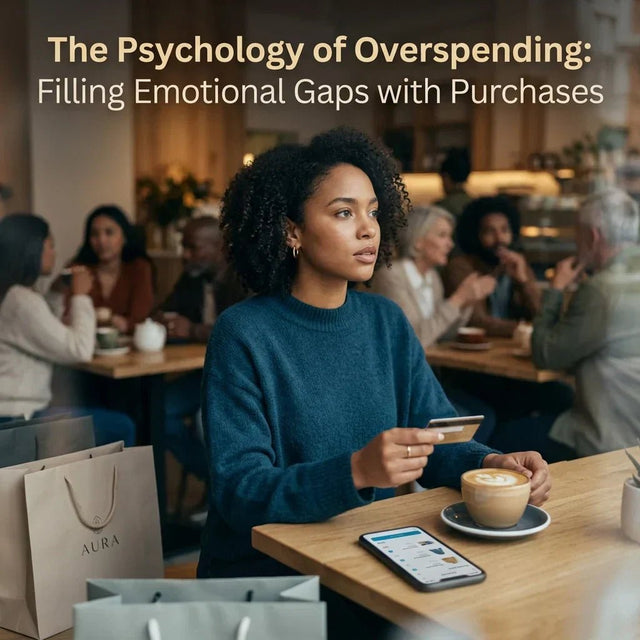
The Psychology of Overspending: Filling Emotional Gaps with Purchases
We’ve all been there. It’s 11:00 PM on a Tuesday, you’ve had a draining day at work, and suddenly, that targeted ad for a $75 ergonomic keyboard or a pair of sneakers you don’t need looks like the most important thing in the world. You click "Buy Now," feel a momentary rush of excitement, and then... the package arrives three days later, and the thrill is gone.
Why do we do this? Why does our brain convince us that a piece of plastic or fabric can fix a bad mood?
At Chazon Strategies, we see this all the time. Overspending isn’t usually about being "bad with money." It’s almost always about trying to solve an internal problem with an external solution. If you want to break the cycle of living paycheck to paycheck, you have to stop looking at your bank statement and start looking at your heart.
The Science of the "Shopping High"
Overspending is fundamentally a psychological coping mechanism. When you buy something new, your brain releases dopamine: the "feel-good" neurotransmitter. It’s the same chemical hit you get from eating chocolate or getting a "like" on Instagram.
This dopamine hit provides temporary emotional relief. If you’re feeling stressed, lonely, or bored, that little spark of pleasure feels like a lifeline. But here’s the catch: it’s short-lived. Research shows that overspending is often a conditioned response. Every time you use shopping to feel better, you’re training your brain to associate spending with safety or happiness.
The problem? The underlying emotion: the stress, the boredom, the sadness: is still there once the box is opened. This creates a reinforcing cycle where you need bigger and more frequent purchases to get the same emotional high.

The 5 Most Common Emotional Gaps We Try to Fill
To stop overspending, you have to identify which "gap" you’re trying to plug. Most young adults fall into one of these five categories:
1. The Stress Gap
When life feels overwhelming or out of control, shopping offers a sense of autonomy. You might not be able to control your boss or your dating life, but you can control what you put in your cart. Making a purchase feels like taking action, even if it’s the wrong kind of action for your long-term goals.
2. The Identity Gap (Compensatory Consumption)
This is a big one for young adults. We use purchases to reinforce how we want to be seen: or how we want to see ourselves. If you feel insecure about your career, you might buy expensive professional gear to "prove" you belong. If you feel uncreative, you might buy a high-end camera you never use. This is called "compensatory consumption." We are literally trying to buy a personality or a status we feel we’re lacking.
3. The Boredom Gap
Sometimes, we don’t spend because we’re sad; we spend because we’re under-stimulated. Scrolling through shopping apps has become a form of entertainment. It’s a low-effort way to feel something. The "hunt" for a deal or the anticipation of a delivery gives a mundane week a sense of excitement.
4. The FOMO Gap (Social Comparison)
We live in an era of curated lifestyles. When you see everyone else on social media living a certain way, it creates a "gap" between your reality and their highlight reel. You spend money to bridge that gap, trying to keep up with a standard that might not even be real.
5. The "Hope" Gap
Retail therapy often involves "visualization." You buy the hiking gear because you imagine yourself being the kind of person who goes on adventures. You buy the expensive planners because you imagine yourself being organized. You aren’t just buying a product; you’re buying a version of a future self that feels better than your current self.
Why Credit Cards Make It Easier to Hide
It’s no secret that it’s easier to spend money you can’t see. When you use a credit card, the "pain" of the transaction is delayed. Your brain registers the "gain" (the new item) immediately, but the "pain" (the bill) doesn't show up for 30 days.
This disconnect is dangerous for emotional spenders. It allows you to fill emotional gaps using "future you's" money. You’re essentially stealing peace and security from your future self to get a 15-minute dopamine hit today.

How to Fill the Gaps Without Draining Your Bank Account
Breaking the cycle isn’t about "willpower." It’s about strategy. If you try to stop spending without replacing the emotional reward, you’ll eventually snap and go on a bigger binge. Here is how to find emotional fulfillment that actually lasts:
1. Identify the "Why" Before the "What"
Before you hit "checkout," ask yourself: What emotion am I feeling right now? Am I tired? Am I lonely? Am I feeling "less than"? If the answer is an emotion, a physical product cannot fix it. Labeling the feeling takes away its power.
2. The 24-Hour (or 72-Hour) Rule
Give the dopamine time to wear off. If you want something, put it in the cart and walk away for at least 24 hours. Most of the time, the emotional urge will pass, and you’ll realize you didn’t actually want the item: you just wanted the feeling of buying it.
3. Find "Free" Dopamine
Replace the shopping high with something else that releases dopamine but costs nothing. A workout, a walk outside, calling a friend, or even finishing a small task on your to-do list can provide a sense of accomplishment and pleasure without the financial hangover.
4. Practice Stewardship Over Scarcity
At Chazon Strategies, we talk a lot about mindset. People who spend emotionally are often living from a "scarcity" mindset: even if they have money. They feel like they need to grab happiness now because it might not be there later.
Shifting to a Stewardship Mindset means seeing your money as a tool to be managed for a bigger purpose. When you realize your money can build long-term security, it starts to feel more "fun" to save than to spend.
Building Long-Term Security as Self-Care
Here is a radical thought: Financial security is the ultimate form of self-care.
Buying a $15 face mask feels like self-care in the moment. But having a fully funded emergency fund, a solid insurance policy, and a growing investment account provides a level of peace that no skincare product can match.
When you have a foundation of security, the "Stress Gap" starts to shrink. You don’t feel the need to buy things to feel in control because you actually are in control. You aren’t running from your bank account; you’re standing on top of it.

How Insurance Fits Into the Equation
You might wonder why an insurance company is talking about the psychology of spending. It’s because we see how much anxiety comes from the unknown. People often overspend because they are trying to distract themselves from a lack of "true" security.
When you have the right life insurance or disability insurance in place, you’ve checked a massive box of "adulthood." You’ve protected your future. That sense of protection acts as a buffer against emotional spending. It’s a lot harder to blow $200 on a whim when you’re focused on the pride and peace that comes from knowing your legacy is secure.
Final Thoughts: Rewriting Your Money Story
If you’ve been using spending to fill emotional gaps, don't beat yourself up. Shame is just another negative emotion that will drive you back to the mall. Instead, give yourself grace and start being curious about your triggers.
You aren't "bad with money." You’re likely just a human being trying to feel okay in a stressful world. But you deserve more than a temporary dopamine hit. You deserve the deep, lasting confidence that comes from stewardship and security.
Stop filling the gaps with things that break or go out of style. Start filling them with a plan, a purpose, and the peace of mind that comes from knowing you’re building something that lasts.
Ready to shift from survival mode to strategic growth? Let’s look at how we can secure your future so you can stop spending for today and start building for tomorrow.
Ready to fill the gap for good? Build long-term security that actually satisfies.
0 Comments
There are no comments for this article. Be the first one to leave a message!