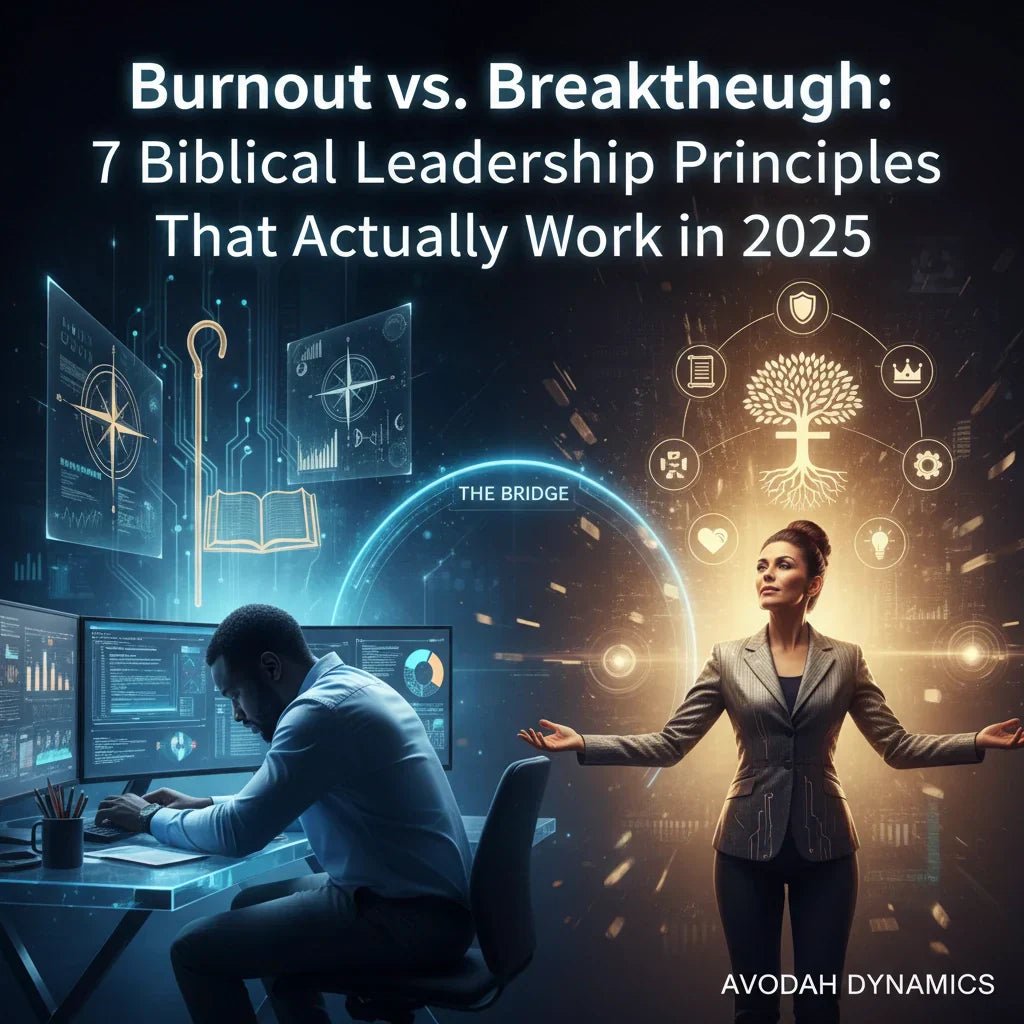

Biblical Leadership Principles for Navigating Modern Challenges
Nov 04, 2025by K. A. Perkins

Leadership in 2025 feels different, doesn't it? Between remote teams, economic uncertainty, and constant digital noise, even the most seasoned leaders are hitting walls they never saw coming. The line between burnout and breakthrough often comes down to one thing: whether you're leading from biblical principles or just winging it on caffeine and good intentions.
Here's the reality check: poor self-management leads to burnout, not breakthrough. But when you anchor your leadership in timeless biblical principles, you don't just survive the chaos, you actually thrive in it.
Let's dive into seven biblical leadership principles that aren't just theoretical concepts but practical game-changers for modern leaders.
1. Self-Discipline: Your Private Life Determines Your Public Impact
Your private disciplines shape your public leadership. Period.
Most leaders burn out not because they have too much responsibility, but because they never learned to manage what truly matters. Self-discipline isn't about being perfect, it's about being consistent in the areas that fuel your leadership instead of drain it.

Think about it: when was the last time you had a consistent prayer routine that wasn't rushed between meetings? When did you last read Scripture for your own transformation instead of just mining it for content? These aren't luxury activities, they're leadership essentials.
Practical self-discipline looks like:
- Scheduling prayer time regardless of how busy you feel
- Setting boundaries around your digital consumption
- Creating non-negotiable time for rest and reflection
- Saying no to good opportunities that steal from your best priorities
Self-discipline protects against both burnout and moral failure. When rest, boundaries, and spiritual renewal are missing, exhaustion opens the door to compromise. Disciplined leaders stay grounded during storms instead of getting tossed by every wave of pressure.
2. Time Management: Your Schedule Reveals Your True Values
Here's a truth bomb: your calendar reflects your values more than your words do.
If you say family matters but never schedule time for them, your calendar is telling the truth your mouth won't admit. If you claim to prioritize spiritual growth but can't find time for Scripture reading, your schedule is exposing your real priorities.
Biblical leadership emphasizes rhythmic living, creating intentional rhythms for prayer, family, rest, and focused work. This isn't about perfect time blocking; it's about protecting what matters most from the tyranny of the urgent.
The breakthrough happens when you:
- Guard your calendar like you guard your bank account
- Build Sabbath principles into your weekly rhythm (yes, even in 2025)
- Block time for strategic thinking, not just reactive tasks
- Master the art of saying no to good things that steal from the best things
3. Servant Leadership: Leading by Lifting Others
Jesus flipped the leadership script: "Whoever wants to become great among you must be your servant" (Matthew 20:26). This isn't just nice theology: it's practical leadership strategy that prevents the ego burnout that destroys so many leaders.

Servant leadership shifts the weight from personal achievement to collective flourishing. When you're focused on serving others rather than protecting your position, you build the kind of trust and loyalty that sustains teams through difficult seasons.
Servant leaders in 2025:
- Put team development before personal recognition
- Ask "How can I serve you?" instead of "What can you do for me?"
- Create opportunities for others to shine and grow
- Lead with humility while maintaining clear direction
This approach doesn't make you weak: it makes you antifragile. Servant leaders rarely burn out because their identity isn't tied to being the hero of every story.
4. Vision: See Beyond the Immediate Crisis
"Where there is no vision, the people perish" (Proverbs 29:18). In 2025's rapid-fire environment, leaders who only think quarterly are setting themselves up for exhaustion and frustration.
Vision provides meaning during difficult seasons and prevents the despair that fuels burnout. When you lose sight of purpose, you lose momentum. But when your leadership is anchored in a compelling vision of the future, temporary setbacks become stepping stones.
Visionary leadership requires:
- Regular time for strategic thinking and prayer
- Communication that connects daily tasks to bigger purposes
- Faith-based decision making that considers long-term impact
- The courage to make unpopular decisions that serve the vision
5. Submission to God: The Ultimate Leadership Hack
This might sound counterintuitive, but the key to confident leadership is recognizing that you're not ultimately in control. Good leaders understand they're stewards, not owners.

When you surrender control and trust God's sovereignty over outcomes, you release tremendous psychological pressure. You're no longer carrying the weight of every decision, every outcome, every person's response. You're partnering with God in His work.
Submitted leaders:
- Make decisions with wisdom and trust God with results
- Handle criticism without defensiveness
- Navigate transitions with confidence, knowing God goes before them
- Find identity in their relationship with God, not their position
This isn't passive leadership: it's confident leadership that doesn't need to control everything to be effective.
6. Continuous Learning: Growth Mindset as Spiritual Discipline
An organization can only grow as its leaders grow. In 2025, this means staying curious about new technologies, generational differences, cultural shifts, and emerging opportunities.
The apostle Paul encouraged Timothy to keep developing his leadership skills: counsel that applies to every leader today. Stagnation breeds frustration and burnout; growth breeds vitality and breakthrough.
Growing leaders:
- Read beyond their comfort zone and industry
- Seek mentorship and coaching regularly
- Learn from failures without getting stuck in them
- Stay open to feedback, especially from younger team members
7. Integrity: Character That Compounds Over Time
Love and truth form good leaders; sound leadership is founded on loving integrity. This isn't about being perfect: it's about being consistent.
People follow what you model, not just what you teach. Consistency, not charisma, earns long-term trust. When leaders maintain high character standards, they build organizational cultures that weather storms far better than personality-driven leadership.

Integrity in action:
- Admitting mistakes quickly and making them right
- Keeping commitments even when it's inconvenient
- Treating people the same way in private as in public
- Making decisions based on principles, not just profits
The Integration: Making It Work Together
These seven principles work as an integrated system. Self-discipline creates space for vision. Submission to God prevents ego-driven decisions. Servant leadership combined with continuous learning builds teams that attract excellence. Integrity anchors everything when pressures mount.
The breakthrough path for 2025 requires recognizing that leadership isn't built in moments of inspiration but in quiet, daily decisions to obey when it's hard, focus when it's dull, and persevere when it's costly.
Leaders who implement these principles don't eliminate challenges: they build the resilience, clarity, and character to navigate them without sacrificing themselves or their organizations.
At Avodah Dynamics, we're committed to helping leaders integrate these biblical principles into practical leadership strategies that work in today's world. Because when your leadership is rooted in truth, breakthrough becomes inevitable.
Frequently Asked Questions
Q: How can Christian coaching help me apply these biblical leadership principles? A: Christian coaching provides personalized guidance to integrate these principles into your specific leadership context. A Christian coach helps you develop practical strategies for self-discipline, time management, and servant leadership while keeping your faith at the center.
Q: What role does Christian apparel play in leadership identity? A: Christian apparel can serve as a daily reminder of your values and a conversation starter about faith in the workplace. It's a simple way to align your external expression with your internal convictions as a leader.
Q: Can Christian music support leadership development? A: Absolutely! Christian music provides inspiration, encouragement, and spiritual grounding that can fuel your leadership journey. It's especially helpful during challenging seasons when you need reminders of God's faithfulness and purpose.
Q: How does being part of a Christian lifestyle brand community benefit leaders? A: A Christian lifestyle brand community connects you with like-minded leaders who share your values. This peer support is crucial for accountability, encouragement, and practical wisdom-sharing as you apply biblical principles to modern leadership challenges.
Q: What makes faith-based coaching different from secular leadership coaching? A: Faith-based coaching integrates biblical wisdom with practical leadership strategies, addressing both professional growth and spiritual development. It recognizes that true leadership transformation happens when your whole person: spirit, mind, and actions( align with God's purposes.)

K.A. Perkins is a purpose-driven author, educator, and founder of Avodah Dynamics, a faith-fueled movement empowering people to align ambition with purpose. Blending leadership, creativity, and spirituality, he equips the next generation to live with discipline, integrity, and impact.
avodahdynamics.com
avodahdynamics.com