The Avodah Lexicon

    The words we build with.

    Avodah (עֲבוֹדָה) is the Hebrew word that holds work, service, and worship in a single breath. Around it we've gathered 30 Hebrew words — the Yesodot — each one a discipline to practice, a lens for meaningful work, and a doorway into the ecosystem. This lexicon is the vocabulary of the movement: read it, hear it, build with it.

    30 of 30 words

    Asafa — Gathering, assembly, in-gathering. Used for the harvest assembly and the convening of leaders.
    Asafaאֲסֵפָה

    ah-seh-FAH

    Asafa is the gathering — the assembly where voice, faith, and culture build leaders together.

    The theology of the gatheringWhy networking fails and Asafa worksConvening leaders on purpose
    Read the entry
    Binah — Understanding, discernment, insight. The Hebrew word for the wisdom that separates this from that — true from clever, good from merely useful.
    Binahבִּינָה

    bee-NAH

    Binah is discerning understanding — the wisdom that distinguishes between things, not just collects them.

    Knowledge vs. understanding — the Proverbs distinctionHow discernment compounds where information doesn'tBinah and the weekly review
    Read the entry
    Chadash — New, renewed, fresh. The Hebrew word for the making new of what was worn — the restoration of systems, habits, and culture so they outlast the initial transformation.
    Chadashחָדָשׁ

    khah-DAHSH

    Chadash is renewal — the phase where transformed organizations institutionalize change through sustainable systems and continuous improvement.

    Institutionalizing change so it outlasts the founderSustainable systems as an act of stewardshipLeadership habits that become organizational culture
    Read the entry
    Chayil — Strength, valor, capability, wealth, army. The word behind 'woman of valor' (eshet chayil) — and behind every capable force in the Hebrew Bible.
    Chayilחַיִל

    KHAH-yil

    Chayil is valiant capability — the strength of the Proverbs 31 builder, male or female, who gets it done.

    Eshet chayil: the Proverbs 31 woman as economic forceWhy Hebrew praises competenceValor in business, not just battle
    Read the entry
    Chazon — Vision, revelation, prophetic sight. The word Habakkuk uses for the vision written on tablets so the runner can carry it.
    Chazonחָזוֹן

    khah-ZONE

    Chazon is vision — the prophetic sight that lets a builder name and carry what God has shown them.

    Vision vs. goal-settingWriting a Chazon you can repeat in 30 secondsHabakkuk 2 as a builder's manual
    Read the entry
    Chesed — Steadfast love, loving-kindness, covenant loyalty. Love that shows up as commitment and action, not just feeling.
    Chesedחֶסֶד

    KHEH-sed

    Chesed is covenant love — the stubborn kindness that builds what sentiment never could.

    Why English can't translate chesedCovenant love vs. emotional loveChesed in Ruth and David's stories
    Read the entry
    Chokhmah — Wisdom, skill, craft, discernment. In the Hebrew Bible, Chokhmah is far more than intelligence or knowledge — it is the skill of living according to God's design. It combines knowledge, understanding, discernment, practical skill, moral judgment, wise decision-making, craftsmanship, and leadership. In short: the ability to apply truth correctly.
    Chokhmahחָכְמָה

    khokh-MAH

    Chokhmah is skilled wisdom — the God-given ability to apply truth correctly in real work.
    Craft wisdom vs. abstract knowledgeFaith and technology — building with ChokhmahAI, tools, and the Bezalel model
    Read the entry
    Devarim — Words, things, matters. The Hebrew name of the book of Deuteronomy — the words Moses repeated before the people crossed over.
    Devarimדְּבָרִים

    deh-vah-REEM

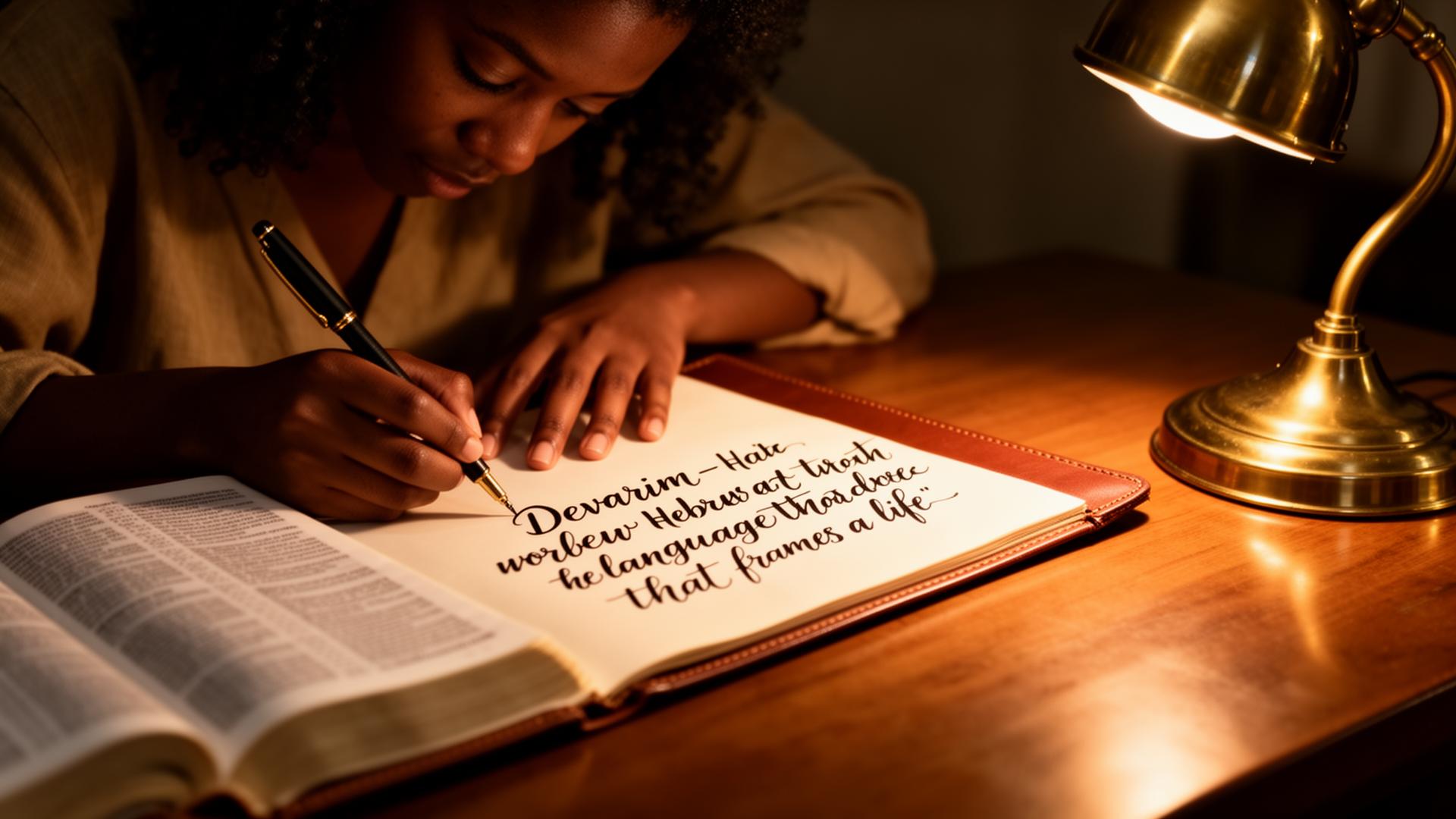
    Devarim is words — the spoken and written language that frames a movement, a brand, and a life.

    Words create worlds — biblically and literallyBrand copy as DevarimDaily confession and identity
    Read the entry
    Emunah — Faith, faithfulness, steadiness. The Hebrew word for the trust that doesn't just believe but keeps showing up.
    Emunahאֱמוּנָה

    eh-moo-NAH

    Emunah is faithfulness — steady, day-after-day trust that becomes the shape of a life.

    Faithfulness as a daily disciplineSpiritual growth by compounding, not spikesThe Habakkuk 2:4 principle for builders
    Read the entry
    Gevurah — Strength, might, courage, valor. The Hebrew word for the disciplined power that doesn't just push hard — it pushes right.
    Gevurahגְּבוּרָה

    geh-voo-RAH

    Gevurah is strength and courage — restrained power that holds the line under God's command.

    Gevurah vs. hustle — strength that doesn't burnCourage as a daily discipline, not a feelingCarrying weight for the long obedience
    Read the entry
    Kavanah — Intention, direction of the heart, focused aim. The inner posture that turns a routine act into an act of worship.
    Kavanahכַּוָּנָה

    kah-vah-NAH

    Kavanah is holy intention — aiming the heart at God before the hands touch the work.

    Intention vs. motivation: why aim outlasts energyThe morning declaration as kavanah practiceHow Jewish prayer tradition shaped the word
    Read the entry
    Kavod — Glory, honor, weight. The Hebrew word for something that has heft, substance, and worth — the same word used for the glory of God.
    Kavodכָּבוֹד

    kah-VODE

    Kavod is glory and weight — the substance of excellence that leaves a legacy God is honored by.

    Kavod as weight, not applauseExcellence as worshipBuilding for legacy, not the algorithm
    Read the entry
    Kehillah — Assembly, congregation, community. The Hebrew word for the gathered people of God — a house of belonging, accountability, and shared mission.
    Kehillahקְהִלָּה

    keh-hee-LAH

    Kehillah is the assembly — the house of belonging where builders gather, grow, and go together.

    Kehillah as house, not a group chatBelonging as a builder's infrastructureAccountability in the assembly
    Read the entry
    Kesher — Connection, relationship, linkage, bond, knot. Kesher is the Hebrew word for the tie between people, between God and his people, and between a builder and their tribe. It is covenant made tangible.
    Kesherקֶשֶׁר

    KEH-shehr

    Kesher is the sacred bond — connection, relationship, and covenant linkage between builders.

    Covenant relationships vs. transactional networkingWhy builders need a tribe, not an audienceKesher and Kesheros — the relational OS
    Read the entry
    Kodesh — Holiness, sacredness, set-apartness. Not a feeling of purity but a status: claimed by God for His purposes.
    Kodeshקֹדֶשׁ

    KOH-desh

    Kodesh means set apart — the holiness that turns an ordinary desk into an altar.

    Sacred/secular divide — and why Hebrew rejects itHoliness as status, not feelingConsecrating ordinary work
    Read the entry
    Kol — Voice, sound, call. Used for God's voice, the prophet's cry, and the music that fills the temple.
    Kolקוֹל

    KOHL

    Kol is voice — the sound, the testimony, and the call that carries who you are into the room.

    Finding your Kingdom voiceWhy sound is theologyChristian EDM and gospel house as Kol
    Read the entry
    Malkut — Kingdom, kingship, reign. The Hebrew word for the rule of a king — the same word Jesus used when he preached the Kingdom of God.
    Malkutמַלְכוּת

    mahl-KHOOT

    Malkut is Kingdom — the reign of God as the architecture we're actually building for.

    Kingdom vs. empire — the architecture questionBuilding companies that reflect MalkutKingdom mindset for modern builders
    Read the entry
    Moreshet — Heritage, legacy, inheritance of identity. The Hebrew word for what a generation is entrusted to preserve and pass forward — faith, wisdom, culture, and calling.
    Moreshetמוֹרֶשֶׁת

    moh-REH-shet

    Moreshet is the spiritual, cultural, and Kingdom legacy passed from one generation to the next — what continues to shape people after you're gone.

    Spiritual legacy vs. reputationDiscipleship and mentorship as legacy workFamily heritage and faith formation
    Read the entry
    Musar — Instruction, discipline, and moral formation. The Hebrew word used throughout Proverbs for the correction that makes a person wise.
    Musarמוּסָר

    moo-SAR

    Musar is biblical discipline — instruction that shapes character through correction, not motivation.

    Biblical discipline vs. modern willpowerHow correction forms characterWhy Proverbs treats Musar as treasure
    Read the entry
    Netivot — Paths, pathways, trodden ways. The plural of netivah — the tracks through the wilderness that become visible only by walking them.
    Netivotנְתִיבוֹת

    neh-tee-VOHT

    Netivot means paths — the Hebrew conviction that calling is a road you walk, not a box you fit.

    Paths vs. ladders: two ways to read a careerThe four Avodah Paths: MAKE, LEAD, CARE, REACHWhy detours are part of the route
    Read the entry
    Otzar — Treasury, storehouse, treasure. The word for the place where a kingdom stores what matters most.
    Otzarאוֹצָר

    oh-TZAR

    Otzar is treasury — the library of books, courses, and writings that store the wisdom of the movement.

    Why every movement needs a libraryBooks vs. content: what actually lastsHow to read like a builder
    Read the entry
    Q'riah — Calling, invitation, reading aloud. The word for God's summons on a life and for reading Scripture aloud in the assembly.
    Q'riahקְרִיאָה

    keh-ree-AH

    Q'riah is calling — the specific invitation of God on a life, heard and answered in the ordinary.

    Calling as invitation, not lightning strikeHow to test what you're hearingGift, burden, neighbor — the three-fold check
    Read the entry
    Ruach — Spirit, breath, wind. The word used for the Spirit of God hovering over the waters at creation.
    Ruachרוּחַ

    ROO-akh

    Ruach is spirit, breath, and wind — the Spirit of God animating the work of your hands.

    Spirit-led entrepreneurshipPraying before you shipWorship as the operating system
    Read the entry
    Shalom — Peace, wholeness, completeness, welfare. The word for nothing missing and nothing broken.
    Shalomשָׁלוֹם

    shah-LOHM

    Shalom is wholeness — peace as the integration of work, family, faith, and self into one life.

    What Shalom actually means in HebrewIntegration vs. balanceWhy Shalom is the real KPI
    Read the entry
    Shevet — Tribe, rod, scepter. The word for the family unit that carries identity, and for the shepherd's rod that protects and corrects.
    Shevetשֵׁבֶט

    SHEH-vet

    Shevet means tribe and rod — the small group that disciplines you into who you're called to be.

    Why solo discipline always plateausPicking a tribe that raises your ceilingThe cohort model: 30 days, 8 weeks, measurable
    Read the entry
    Shinui — Change, transformation, variation. The Hebrew word for the deliberate alteration of form, function, and outcome — not random drift, but directed metamorphosis.
    Shinuiשִׁנּוּי

    shee-NOO-ee

    Shinui is transformation — the deliberate shift where organizations and leaders turn vision into improved performance across every system.

    Transformation vs. change — the difference that lastsLeadership development as Shinui infrastructureCulture as a system you can redesign
    Read the entry
    Talmid — Disciple, learner, apprentice. The Hebrew word for someone who follows a rabbi so closely they begin to move, speak, and work like him.
    Talmidתַּלְמִיד

    tahl-MEED

    Talmid is disciple — a lifelong apprentice of Jesus whose whole life is the classroom.

    Discipleship as apprenticeship, not attendanceHow to copy a life, not just a doctrineThe Rabbi–Talmid model for modern builders
    Read the entry
    Tiferet — Beauty, splendor, glory — specifically the beauty that comes from harmony. In the Kabbalistic tree, Tiferet sits at the center, balancing mercy and judgment.
    Tiferetתִּפְאֶרֶת

    tif-EH-ret

    Tiferet is beautiful balance — the harmony that makes excellent work excellent.

    Beauty as balance: the center of the Tree of LifeWhy harmony beats intensityTiferet between Chesed (mercy) and Gevurah (strength)
    Read the entry
    Tikvah — Hope, expectation, cord. The same word means both 'hope' and the literal rope Rahab hung from her window.
    Tikvahתִּקְוָה

    teek-VAH

    Tikvah is hope — the cord that ties a builder's present to a promised future.

    Tikvah vs. optimism — the cord vs. the vibeRahab's red cord as builder's theologyHope as an executable discipline
    Read the entry
    Yerusha — Inheritance, possession, that which is passed down. The Hebrew word for the concrete assets — land, wealth, and property — one generation entrusts to the next.
    Yerushaיְרֻשָּׁה

    yeh-roo-SHAH

    Yerusha is the tangible inheritance — businesses, wealth, IP, land, systems — that faithful Avodah leaves for future generations to keep building the Kingdom.

    Biblical stewardship and generational wealthKingdom entrepreneurship and business successionEstate planning from a biblical perspective
    Read the entry
    Go deeper

    Words become a way of building.